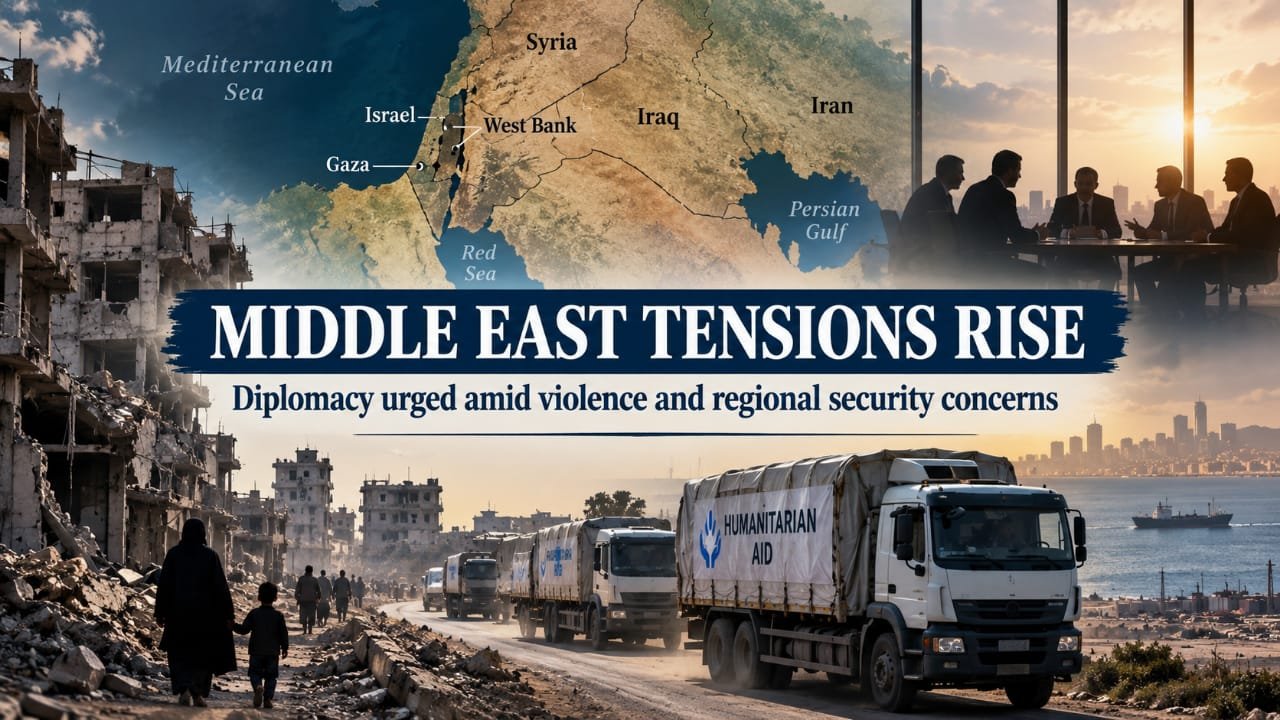
Middle East Tensions Rise as Regional Violence Fuels Calls for Diplomacy
By Nada Reda
CAIRO, October 24, 2026 — Tensions across the Middle East continued to escalate on Saturday, as fresh violence in several areas raised concerns about regional stability, civilian safety, and the risk of a wider conflict.
In the occupied West Bank, Israeli authorities imposed widespread closures across Hebron following attacks that Israeli officials said killed two soldiers. The restrictions disrupted movement and access to essential services, adding to the difficulties faced by residents.
Meanwhile, violence continued to affect other parts of the region. In Yemen, an airstrike near Taiz reportedly killed four members of one family and injured five others, according to local health authorities cited in media reports. Another strike in Saada reportedly injured several African migrants. The parties involved have exchanged accusations over responsibility for the attacks.
Security concerns have also intensified around the Gulf and the Strait of Hormuz, a vital route for global energy shipments. Reports of attacks involving vessels and rising military tensions have increased fears that further escalation could disrupt maritime trade and push energy prices higher.
Diplomatic efforts remain critical as regional and international actors seek to prevent the crisis from spreading. Egypt has repeatedly emphasized the importance of political solutions, regional coordination, humanitarian access, and the establishment of an independent Palestinian state. On Friday, foreign ministers from Egypt, Saudi Arabia, Turkey, and Pakistan called for urgent action toward a two-state solution, according to a joint statement reported by regional media.
The humanitarian consequences remain a major concern. Continued violence, restrictions on movement, and threats to essential infrastructure place additional pressure on civilians already facing difficult conditions. International calls for restraint and renewed negotiations are therefore increasingly important.
As developments unfold, the coming days may prove crucial for regional diplomacy. Preventing further escalation will require sustained negotiations, protection of civilians, respect for international law, and coordinated efforts to reduce tensions across the region.
Share this content:











إرسال التعليق